
Finding the cheapest car insurance companies depends on your state, population density, driving record, vehicle, and coverage choices. A published average annual premium may differ significantly from your personalized quote. Legal requirements vary too, so California and Wisconsin require different minimum liability coverage.
We compare rates using the same coverage details, then check state minimums, quote tools, deductibles, discounts, and claims service across all 50 states and Washington, D.C. Because premiums are personalized rather than fixed price tags, we'll start by showing how to build a fair comparison.
Key Takeaways
- We compare quotes using identical drivers, vehicles, coverage limits, deductibles, and ZIP codes so prices remain comparable.
- State laws, repair costs, weather, traffic, claims, and uninsured drivers can shift the average annual premium by thousands each year.
- We check both liability-only and full-coverage premiums, then compare the protection each price provides.
- We verify state minimums with the NAIC auto insurance guide before calling a policy affordable.
- The cheapest car insurance companies aren't always the best value. Your driving record, credit history where permitted, mileage, vehicle, discounts, and insurer can change the final quote substantially.
Affordable Auto Insurance Starts Here
Compare Auto Insurance Quotes and Find a Better Rate
Compare quotes from leading insurance providers in a few simple steps. Find coverage options that fit your vehicle, needs, and budget.
Compare Quotes NowHow to Compare the Lowest Auto Insurance Rates in Every U.S. State
We compare car insurance quotes in a fixed sequence, so the cheapest quote doesn't win because it includes less coverage. First, we identify the state's legal requirements. Then, we collect matching driver and vehicle details, request quotes from several sources, and compare the final policy price with the same limits and deductibles.

Start With Your State's Required Auto Insurance Coverage
Every state sets its own minimum liability coverage rules. Those requirements may include bodily injury liability, property damage liability, personal injury protection, medical payments, and protection for accidents involving uninsured or underinsured drivers. Some states require only certain types, while no-fault states use rules that change how injury claims work.
We check the state insurance department and the National Association of Insurance Commissioners (NAIC) before comparing premiums. Laws, state minimum liability limits, and coverage rules can change, so an older comparison may no longer be accurate.
Oklahoma offers a commonly cited example: 25/50/25. The first number means up to $25,000 in bodily injury liability for one person. The second provides up to $50,000 for bodily injuries in one accident. The final number means up to $25,000 for property damage. The Oklahoma Insurance Department's explanation confirms these limits.
Those figures don't apply nationwide. We use Oklahoma's numbers only to show how liability limits are written, then apply each state's actual requirements to its quotes. We also record whether a quote includes optional protection, because a lower premium may reflect fewer benefits rather than a better rate.
Prepare the Details That Make Quotes Comparable
Before requesting prices, we gather the same information for every insurer. A missing VIN or different mileage estimate can make two quotes look comparable when they aren't.
Our quote sheet includes:
- The vehicle identification number (VIN), year, make, and model.
- The garaging address, ZIP code, and state.
- Annual mileage and approximate commute distance.
- The driver's license information for every listed driver.
- Tickets, including a speeding ticket, accidents, claims, and other driving record details.
- The current insurer and existing coverage, if a policy is already active.
- The desired effective date for the new policy.
- Every household driver and vehicle, including people who may use the car regularly.
We enter each detail consistently. For example, reporting 8,000 miles to one company and 15,000 miles to another can distort the comparison. The same problem occurs when one quote lists a household driver and another leaves that person out. A recent at-fault accident can also affect the results differently if the details aren't reported consistently.
Next, we set identical liability limits, deductibles, and optional coverages. We request at least three quotes, then compare the premium for the full policy term, including fees and installment costs. An advertised starting price is only a doorway into the process. The final quote is the figure that belongs in our comparison, not an average annual premium from a general rate study.
Request Quotes From National, Regional, and Local Insurers
We use more than one shopping channel because no single source displays every available carrier. An insurance comparison platform such as Insurify, The Zebra, Compare.com, NerdWallet, Gabi, or Jerry may provide real-time quotes, estimates, or offers from partner insurers. Results can differ based on the companies each platform works with and the information it collects.
We also visit carrier websites directly and contact a licensed insurance agent. Direct quotes can include insurers absent from a marketplace, while independent agents may compare several regional companies. When eligible, we include GEICO, State Farm, Progressive, Travelers, Farmers, Allstate, and USAA. USAA eligibility is generally limited to members of the military community and qualifying families.
Regional insurers deserve equal attention. Population density, underwriting, claims costs, and local market experience can affect prices in one state. We screen national and regional carriers alike when identifying the cheapest car insurance companies. We record the insurer, coverage limits, deductibles, discounts, fees, and final six-month or annual premium for every quote. That side-by-side record shows whether liability-only car insurance or full coverage car insurance offers the better value for the shopper's needs. It also shows whether the cheapest car insurance companies truly offer the lowest price when limits, deductibles, fees, and optional benefits match.
Build an Apples-to-Apples Auto Insurance Rate Comparison
A low premium only tells us part of the story. If one quote has weaker liability protection, higher deductibles, or fewer benefits, the comparison is tilted. We use one worksheet or spreadsheet for every offer, so each insurer faces the same facts and coverage choices.

Match Liability Limits, Deductibles, and Optional Protection
We enter the same minimum liability coverage and property damage limits for every quote. We also match personal injury protection (PIP) or medical payments coverage, along with uninsured motorist coverage limits. If a state requires certain coverage, we confirm its state minimum liability limits before requesting prices.
Next, we compare collision and comprehensive coverage using identical deductibles. A policy with a $1,000 deductible amount will often cost less than one with a $250 deductible. However, you would pay more after a covered claim. We record rental reimbursement, roadside assistance, gap coverage, and custom equipment separately because insurers may include, exclude, or price them differently.
State minimum liability is often the cheapest option, but it may leave your savings and property exposed after a serious crash. It may also fail to satisfy an auto lender's requirements. We use liability-only car insurance for a budget baseline, then review full coverage car insurance when the vehicle is financed, leased, or too expensive to replace comfortably.
Our worksheet includes these fields for every offer:
- Insurer, quote date, vehicle, driver details, and policy term.
- Liability, PIP or medical payments, and uninsured motorist limits.
- Collision and comprehensive deductibles.
- Optional benefits, exclusions, and coverage restrictions.
- Six-month premium, average annual premium, payment plan, and total fees.
The NAIC auto insurance consumer resources provide useful explanations of coverage types, deductibles, and state insurance resources. We use those details to keep the worksheet consistent rather than relying on an insurer's headline price.
Affordable Auto Insurance Starts Here
Compare Auto Insurance Quotes and Find a Better Rate
Compare quotes from leading insurance providers in a few simple steps. Find coverage options that fit your vehicle, needs, and budget.
Compare Quotes NowCheck Discounts, Fees, and the Real Cost of Each Policy
We ask every insurer to apply every discount we can document. That includes safe-driver, bundling, defensive-driving, good-student, paid-in-full, anti-theft, low-mileage, and telematics discounts. A safe driver discount can reduce the premium substantially, but eligibility rules differ, so we request the actual dollar reduction on each quote.
Usage-based insurance deserves a separate review. Telematics may collect miles driven, hard braking, driving times, or phone use behind the wheel. Before enrolling, we read how the insurer uses, stores, and shares that information, and whether poor driving data can raise the rate.
The premium isn't the full cost if the payment plan adds charges. We record monthly premium costs, installment fees, broker fees, automatic-payment savings, cancellation charges, and policy-service fees. Then we compare the total six-month or annual cost, not just the monthly payment. A policy that appears cheaper each month may cost more after fees or require a large upfront payment.
Read Complaint Records and Claims Reviews Before Switching
Price matters, but claims service determines what happens after an at-fault accident, when the car is damaged and bills arrive. Even the cheapest car insurance companies may not provide the best claims experience. We review state insurance department complaint information, the NAIC complaint index when available, and customer satisfaction reviews. A complaint index of 1.00 means an insurer received its expected share of complaints, while a higher figure deserves closer attention.
We also check financial-strength ratings from agencies such as AM Best, Moody's, or Fitch. Repair-shop rules, original-equipment-part policies, claims response times, and local service reviews can affect the experience after an accident. The NAIC Consumer Insurance Search can help confirm an insurer's licensing status, financial information, and complaint records.
Before switching, we verify that the quoted company and agent are licensed in our state. We schedule the new policy to begin before the old one ends, then obtain written confirmation of both dates. Even a short coverage lapse can create legal and financial problems, so we never cancel first and hope the replacement policy starts later.
Compare Car Insurance Rates by State Without Trusting a Single Average
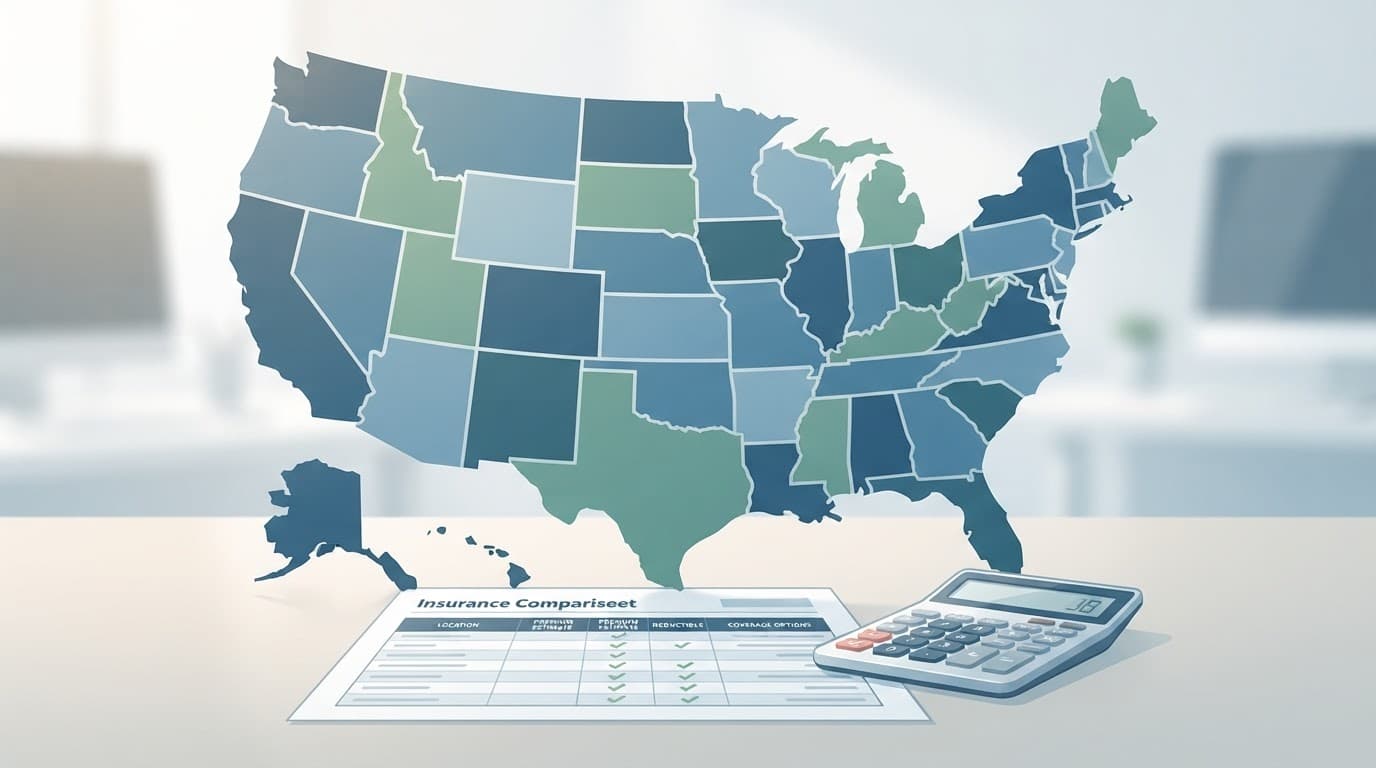
Car insurance rates by state can reveal broad patterns, but an average cannot predict your policy cost. We compare published figures with legal requirements and real quotes because the lowest rate depends on details national tables often smooth away.
Use State Insurance Departments and Reliable Rate Sources
We start with the state insurance department when researching legal requirements. Its website can confirm minimum liability coverage, licensing rules, complaint procedures, rate filings, and consumer protections. The NAIC consumer resources also help you find the correct state regulator and research insurer licensing and complaints.
Legal information and shopping information belong in separate columns of our comparison. State agencies explain what insurers must offer or drivers must carry. Commercial sources estimate what people may pay using different samples, coverage limits, driver profiles, and quote dates.
For rate research, we check:
- NAIC auto insurance database reports and consumer guidance.
- Direct insurer quote pages.
- Comparison marketplaces such as Compare.com.
- Published studies with a visible methodology and update date.
- Regional insurers and independent agents that may not appear in national rankings.
The NAIC's 2023 Auto Insurance Database report summarizes average expenditures and combined average premiums by state. Its average annual premium is a useful baseline, not a promise of your next renewal price. Verify the report's publication date and data period before using it.
A national database cannot identify the cheapest car insurance companies for every driver because insurers keep much of their pricing data proprietary. An insurance comparison platform also shows offers from participating carriers, not every company licensed in your ZIP code. Rates change after new filings, claims trends, underwriting updates, and market shifts, so even a well-researched table has a shelf life.
Understand Why the Cheapest Insurer Changes by State
A carrier's ranking can change at the state line. Traffic congestion, vehicle theft rates, population density, repair costs, uninsured motorists, weather risk factors, competition, underwriting rules, and regulation all shape the price. State minimum liability rules and legal systems also affect how much coverage insurers must price into a policy.
Published tables may compare liability-only premiums, full coverage car insurance premiums, or a blend of both. Those figures answer different questions. Liability coverage protects others when you cause a covered accident, while broader policies usually protect your vehicle from collisions and other covered losses. A lower liability average cannot be compared fairly with a full-coverage average.
We also check the sample profile behind each table. One study may price a single 40-year-old driver with a clean driving record and strong credit-based insurance score. Another may aggregate thousands of marketplace quotes from drivers with different vehicles, ages, histories, and coverage choices. For example, MoneyGeek's state-rate study is useful for identifying location patterns, but its listed update date and assumptions should be checked against the current study.
Consider a simple comparison. Insurer A might show one of the lowest national averages using a standard sedan and a clean-record driver. In your ZIP code, however, it may have higher theft losses or fewer participating agents. Insurer B could rank higher nationally but offer the cheaper local quote after an at-fault accident, different vehicle, or insurance claims history.
A published average is a map of pricing patterns, not a personal quote.
We use national rankings to choose the cheapest car insurance companies for the next round of shopping. Then we compare insurers actually writing policies in your ZIP code, with your age, credit-based insurance score where allowed, driving record, vehicle, claims, deductibles, limits, and optional coverage held constant.
Lower Your Premium While Keeping the Right Protection
The lowest auto insurance rate only helps when the policy can absorb a serious loss. We lower costs by adjusting coverage that fits our finances, not removing protection we may need after a crash. Before renewal, we review the policy, request matching quotes, and allow time to verify the insurer and effective date.

Choose Coverage Based on Assets, Loans, and Driving Needs
We start with the vehicle's value, loan balance, and replacement cost. If a car is financed or leased, the lender usually requires full coverage car insurance until the contract ends. This typically includes collision and comprehensive coverage, and dropping either one could violate the agreement or leave us responsible for repairs and the remaining loan balance.
Liability limits deserve equal attention. State minimum liability may satisfy the law but still fall short after a serious injury or multi-car crash. We consider household assets, income, savings, and property that another person could pursue after an at-fault accident. The NAIC consumer auto guidance explains why limits, deductibles, and optional coverages must be compared together.
Our daily routine also affects the right policy. A long commute, frequent passengers, teen drivers, traffic congestion, and high population density can increase driving exposure. Regular rideshare use may require additional protection, while a rarely driven second vehicle may support lower mileage and different coverage choices.
We choose deductibles with our emergency savings in mind. A $1,000 deductible can lower the premium, but it becomes a costly surprise if we can't pay it after a claim. When household finances, business ownership, valuable assets, or complex liability concerns are involved, we ask a licensed agent whether an umbrella policy has separate underlying-limit requirements and whether state-specific protections apply.
Use Deductibles, Bundles, and Driving Habits Strategically
A higher deductible can reduce the premium if we could pay it tomorrow without using high-interest debt. We compare $250, $500, and $1,000 options while keeping every other limit unchanged. Comparing the deductible amount shows the actual savings instead of disguising weaker coverage as a cheaper rate.
Bundling policies with homeowners or renters insurance may reduce the combined price. However, we compare the total bundled cost with separate policies, including fees, deductibles, exclusions, and coverage differences. We also measure the savings against the average annual premium, not just the monthly payment. A discount helps only when the underlying policies still meet our needs.
Lower mileage can help when our driving pattern genuinely changes. We update annual mileage after moving closer to work, working remotely, or using public transportation. We also ask about a low-mileage discount and usage-based insurance, then review privacy terms, data collection, enrollment rules, and whether poor driving results can increase the rate. The NAIC telematics overview provides background on how insurers use driving data.
At every renewal, we request an updated discount review. A safe driver discount, defensive-driving, paid-in-full, anti-theft, good-student, and low-mileage discounts may have eligibility rules that change after a move, vehicle change, or household update.
Affordable Auto Insurance Starts Here
Compare Auto Insurance Quotes and Find a Better Rate
Compare quotes from leading insurance providers in a few simple steps. Find coverage options that fit your vehicle, needs, and budget.
Compare Quotes NowKnow When a Low Quote Is a Warning Sign
A quote deserves a second look when the price drops far below comparable offers from the cheapest car insurance companies. We check whether it has lower liability limits, omitted household drivers, a much higher deductible, missing uninsured motorist coverage, or fewer benefits. Unclear installment charges, broker fees, exclusions, or cancellation terms can also erase the apparent savings.
Before paying, we obtain proof of insurance, read the exclusions, confirm every listed driver and vehicle, and verify the effective date. We also confirm that the company and agent are licensed locally through the NAIC Consumer Insurance Search or the state insurance department.
We never send money through an unfamiliar payment method because someone is applying pressure. Finally, we cancel the old policy only after the new insurer confirms active coverage in writing. Shopping several weeks before renewal gives us time to resolve discrepancies and prevent a coverage lapse.
Frequently Asked Questions
The cheapest auto insurance rate only matters when we compare matching protection. These answers address common questions after reviewing state requirements, quote sources, coverage limits, and policy costs.

What Is the Cheapest Type of Auto Insurance in Most States?
Liability-only car insurance is usually cheaper than a policy that includes protection for your vehicle. However, it generally pays for injuries or property damage you cause to others. It won't pay to repair your vehicle after theft, hail, vandalism, a collision, or another covered loss. The NAIC's coverage guide explains how these protections differ.
State minimum liability can also leave major financial gaps after a serious crash. Full coverage car insurance typically includes protection for your vehicle, but it costs more. If you finance or lease your vehicle, the legal minimum may not satisfy the lender's requirements.
How Many Auto Insurance Quotes Should Be Compared?
We recommend comparing at least three well-matched quotes before choosing a policy. Five or more quotes can be useful in expensive markets, after a recent claim, or when several insurers compete aggressively in your area.
We broaden the search by using three sources: a direct insurer website, an online comparison tool, and an independent agent. This approach helps us find the cheapest car insurance companies for a specific driver instead of assuming one carrier is cheapest for everyone.
Do Auto Insurance Rates Differ by State?
Yes, rates can vary sharply between states and even between ZIP codes. State laws, traffic congestion, population density, weather, theft, accident frequency, medical expenses, repair prices, claims costs, and insurer competition all influence premiums.
A state's average annual premium can't predict your individual price. We treat published averages as a starting point, then request quotes using your address, vehicle, mileage, driving record, coverage limits, and other rating details.
Are Online Auto Insurance Comparison Sites Accurate?
Some comparison sites provide real-time quotes from participating insurers, while others show estimates or display offers from selected partners. The result depends on the information entered and the companies included in that site's network.
Before buying, we verify the final premium directly with the insurer or a licensed agent. We also confirm coverage limits, deductibles, discounts, fees, exclusions, payment terms, and the policy's effective date. A low estimate can change after the insurer reviews and verifies the application.
Can Credit History Affect Car Insurance Rates?
In many states, insurers may use a credit-based insurance score as one rating factor. That score isn't the same as a standard credit score, even though some credit-related information may help calculate it. State rules vary, and California, Hawaii, and Massachusetts prohibit credit history use in auto insurance rating.
Other factors can also affect your price, including your driving record and whether you have a speeding ticket. We check our state's rules and ask the insurer which rating factors affected the quote. The NAIC's credit-based insurance score guidance explains common restrictions and consumer rights.
When Should a New Auto Insurance Policy Be Purchased?
We shop several weeks before renewal whenever possible. That gives us time to compare declarations pages, question coverage differences, correct application errors, and confirm the replacement policy's effective date.
We keep the old policy active until the new insurer verifies coverage in writing. Canceling first can create a lapse, even when payment or application delays seem minor. If the dates don't align, we ask the insurer or agent to confirm a safe transition plan before making any change.
Conclusion
The cheapest car insurance companies are only a good choice when coverage, limits, deductibles, fees, and claims service match your needs. We verify state requirements, use identical driver and vehicle details, and compare national, regional, and local insurers. The right policy should remain financially useful after an at-fault accident or other serious loss.
Before your next renewal, create a quote comparison sheet and request fresh quotes from several insurers. Rates and personal circumstances change, so a current, apples-to-apples comparison helps you find affordable coverage without sacrificing protection.